“I am no longer my own, but yours. Put me to what you will, rank me with whom you will. Put me to doing, put me to suffering. Let me be employed by you or laid aside for you, exalted for you or brought low for you. Let me be full, let me be empty. Let me have all things, let me have nothing. I freely and heartily yield all things to your pleasure and disposal. And now, O glorious and blessed God, Father, Son, and Holy Spirit, you are mine, and I am yours. So be it. And the covenant which I have made on earth, let it be ratified in heaven. Amen.” - John Wesley, founder of Methodism
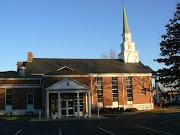
A spiritually significant event happened in the Sunday morning services on February 14. The people of Trinity United Methodist Church formally and officially renewed our recognition and acknowledgement that Trinity Church does not belong to us, but to God.
We did that by praying together John Wesley’s Covenant Prayer, printed above.
I know this is not the first time the people of Trinity have prayed that prayer. In fact, when I first moved into the pastor’s office here, I found several copies of a Covenant Service in which that same prayer had been used. Nonetheless, I believe it was a significant act.
I spent most of the sermon time talking about what it means to tell God that we “freely and heartily yield all things to your pleasure and disposal.” I told of two churches who have prayed that prayer. For one, God chose to “let it be full” and “let it have all things.” It’s now one of the largest United Methodist churches in the world. The other church was one of the largest United Methodist churches in its area when they prayed that prayer. God chose, at least for a time, to “let it be brought low.” (You can hear the sermon at www.trinityannapolis.org.)
When a church prays the Wesley Covenant Prayer, there is no guarantee which way God will take it. On February 14 the Trinity congregation heard the possibilities, took time to search their hearts, and were invited to freely pray it or not. It sounded to me as if almost everyone chose to pray it.
When we acknowledge that the church belongs to God and not to us, then it’s up to God what he wants to do with it. We know that it will be for the greater good, but it may not seem to be for our local good, at least at first.
I’m blessed that Trinity is a people who understand this. For instance, many were very skeptical of putting a big screen up in the front of our beautiful traditional sanctuary, but you were willing to go along with it if that’s what it takes to reach people who don’t know Jesus. And most of us have found now that we actually are glad to have the screen. Going along with God’s plan doesn’t have to be painful.
Of course, all this applies when we pray the same prayer for our own individual lives. Do you trust God that much?
So we’ve prayed the prayer. What will happen now? I believe that God will choose to take Trinity’s yieldedness to his will and turn that to something that, like the video screen, will not only bless our community but bless us as well. I can’t guarantee that, but it’s a feeling I have.
God has a plan for Annapolis. Trinity Church has now publicly said to God, “Whatever you need us to do to make your plan happen, we’ll do it.” I’m excited to see how God is going to answer that prayer. I don’t think we’ll have long to wait.
About Me

- Pastor David
- I serve as pastor of Trinity United Methodist Church in Annapolis, MD. I'm married to beautiful Paula, mother of my 4 sons and one daughter. I was a systems engineer before entering ministry 29 years ago.
Showing posts with label prayer. Show all posts
Showing posts with label prayer. Show all posts
Tuesday, February 16, 2010
Tuesday, January 12, 2010
What If I Didn't Get Healed? (Or Stay Healed?)
A few months ago Trinity Church hosted a guest speaker who led a weekend of healing services. There were some amazing reports of miraculous healings. Many of those who were healed are enjoying their new freedom. Praise the Lord for that!
But some people received prayer and didn't get healed. And others had their symptoms disappear, only to have them return again.
What's going on?
Some people say this kind of thing proves God doesn't really heal, it's all in people's heads. Others say it proves God is capricious or arbitrary or he plays favorites. Some say if you didn't get healed, you don't have enough faith, or the person praying didn't have enough faith, or the church doesn't have enough faith. Some say if something doesn't work every time, it isn't scientific, so forget it.
I don't buy any of that.
People don't get healed every time they go to a doctor. Does that mean all medicine is a fake?
People who do find relief through medicine sometimes find their symptoms returning. Does that mean we should forget the whole thing?
I believe God wants us well. The Bible refers to Christians as the children of God, the body of Christ, the bride of Christ, and the army of God. What loving Father wants his children sick? What head wants its body sick? What groom wants his bride sick? What general wants the army sick?
God so much wants us to be well that he has given us numerous redundant systems to make it happen.
In the natural realm, God put healing in our bodies through an incredible immune system. He gives us medicines, surgery, nutrition, exercise, and alternative therapies.
In the supernatural, the Bible describes a wide range of ways in which miraculous healings are ministered. I have seen people healed in many of these ways.
For a long time I didn't pay a lot of attention to the subject of healing, though I always believed in it and prayed for it and from time to time would see miracles.
Recently, though, God has brought this much more to my attention. In fact, I'm currently working on a book about what I believe are some neglected aspects of the subject. I appreciate your prayers for this project.
The ultimate healing, of course, comes after the death of this mortal body. That's when we receive our new resurrection bodies, fit for eternity. But God wants us well in this life.
God's will is not always done on earth as it is in heaven - that's why Jesus told us, in the Lord's Prayer, to pray for that to happen more. So sometimes people are not well. But that doesn't mean sickness is God's will.
To paraphrase Dr. Robert Tuttle, it's not a sin to be sick and die. But it is a sin to allow someone to be sick and die without doing everything we can to alleviate it.
That includes physical and spiritual remedies.
So I'm learning what I can, and doing what I can. I don't think any of us can do less.
P.S. I always appreciate comments, but I would really like to hear from you about this subject, especially if you have stories or questions.
But some people received prayer and didn't get healed. And others had their symptoms disappear, only to have them return again.
What's going on?
Some people say this kind of thing proves God doesn't really heal, it's all in people's heads. Others say it proves God is capricious or arbitrary or he plays favorites. Some say if you didn't get healed, you don't have enough faith, or the person praying didn't have enough faith, or the church doesn't have enough faith. Some say if something doesn't work every time, it isn't scientific, so forget it.
I don't buy any of that.
People don't get healed every time they go to a doctor. Does that mean all medicine is a fake?
People who do find relief through medicine sometimes find their symptoms returning. Does that mean we should forget the whole thing?
I believe God wants us well. The Bible refers to Christians as the children of God, the body of Christ, the bride of Christ, and the army of God. What loving Father wants his children sick? What head wants its body sick? What groom wants his bride sick? What general wants the army sick?
God so much wants us to be well that he has given us numerous redundant systems to make it happen.
In the natural realm, God put healing in our bodies through an incredible immune system. He gives us medicines, surgery, nutrition, exercise, and alternative therapies.
In the supernatural, the Bible describes a wide range of ways in which miraculous healings are ministered. I have seen people healed in many of these ways.
For a long time I didn't pay a lot of attention to the subject of healing, though I always believed in it and prayed for it and from time to time would see miracles.
Recently, though, God has brought this much more to my attention. In fact, I'm currently working on a book about what I believe are some neglected aspects of the subject. I appreciate your prayers for this project.
The ultimate healing, of course, comes after the death of this mortal body. That's when we receive our new resurrection bodies, fit for eternity. But God wants us well in this life.
God's will is not always done on earth as it is in heaven - that's why Jesus told us, in the Lord's Prayer, to pray for that to happen more. So sometimes people are not well. But that doesn't mean sickness is God's will.
To paraphrase Dr. Robert Tuttle, it's not a sin to be sick and die. But it is a sin to allow someone to be sick and die without doing everything we can to alleviate it.
That includes physical and spiritual remedies.
So I'm learning what I can, and doing what I can. I don't think any of us can do less.
P.S. I always appreciate comments, but I would really like to hear from you about this subject, especially if you have stories or questions.


Thursday, October 1, 2009
People Were Being Healed All Over the Place
You had to be there to believe it. People were being instantly, miraculously healed all over the church.
During special services last Friday and Saturday nights, and after the two regular Sunday morning services, at least twenty people I can identify personally received what John Wimber used to cautiously call “significant symptomatic abatement” immediately after receiving healing prayer. Many more from other churches reported being healed as well.
I haven’t contacted anyone for permission to use their names, but anyone familiar with Trinity Church can identify most of these folks.
One woman had not been able to kneel for ten years. After prayer, she was kneeling at the altar and rejoicing.
Another woman well into retirement age suffered from stress fractures and compression in her back. After prayer she was not only pain free, but touched her toes! – something she had not been able to do, in her words, “for a long time.”
At least three people came into the meeting with one leg shorter than the other. We watched as the legs grew out to the same length in front of our eyes. One reported the next day that it was the first time in years that she had been able to finish a worship service in normal shoes without her feet hurting.
A woman was healed of a deviated septum – she kept going around sniffing to demonstrate!
A woman had broken her wrist some time before and it had healed into a “frozen” position, unable to pivot back and forth. After prayer it had the same range of motion as before it was broken.
A woman I have known very well for a long time wore hearing aids in both ears, and had been almost completely deaf in one ear. After prayer she regained her hearing in both ears without hearing aids.
These are just some of the amazing things God did for us.
For me, perhaps the most exciting thing about it was that Dan Mohler, the Pennsylvania Bible teacher who led the meetings (www.neckministries.org), did not personally pray for most of them. Instead, he led the ordinary members of the church to pray for each other. It was their prayers that resulted in these healings.
In fact, one man was part of a group praying for a woman’s back and neck pain. She received healing. Then the man noticed that his own back no longer hurt. When he told me about it I asked how long he had suffered from the back pain. He said, “Ever since childhood” – which would mean about fifty years!
Jesus said, “Those who believe in me will do the same things that I do, and even greater things” (John 14:12), and, “These signs shall follow those who believe . . . they will lay hands on the sick and they will recover” (Mark 16:17-18). This weekend proved that those promises are still good. True, not everyone received immediate healing, but that does not invalidate what did happen.
Our task now is not to let this become something we look back on as an exciting event that happened once, but as the beginning of a new exciting ongoing ministry. I am open to ideas for how we as a church can encourage each other in stepping out in this ministry, not only in church services, but everywhere we meet people in need. I also urge you not to wait for the church to come up with some program. Go pray for someone!
God is good, God is faithful, God doesn’t change. There are people in need all around us. Let’s go out and demonstrate God’s love and power.
During special services last Friday and Saturday nights, and after the two regular Sunday morning services, at least twenty people I can identify personally received what John Wimber used to cautiously call “significant symptomatic abatement” immediately after receiving healing prayer. Many more from other churches reported being healed as well.
I haven’t contacted anyone for permission to use their names, but anyone familiar with Trinity Church can identify most of these folks.
One woman had not been able to kneel for ten years. After prayer, she was kneeling at the altar and rejoicing.
Another woman well into retirement age suffered from stress fractures and compression in her back. After prayer she was not only pain free, but touched her toes! – something she had not been able to do, in her words, “for a long time.”
At least three people came into the meeting with one leg shorter than the other. We watched as the legs grew out to the same length in front of our eyes. One reported the next day that it was the first time in years that she had been able to finish a worship service in normal shoes without her feet hurting.
A woman was healed of a deviated septum – she kept going around sniffing to demonstrate!
A woman had broken her wrist some time before and it had healed into a “frozen” position, unable to pivot back and forth. After prayer it had the same range of motion as before it was broken.
A woman I have known very well for a long time wore hearing aids in both ears, and had been almost completely deaf in one ear. After prayer she regained her hearing in both ears without hearing aids.
These are just some of the amazing things God did for us.
For me, perhaps the most exciting thing about it was that Dan Mohler, the Pennsylvania Bible teacher who led the meetings (www.neckministries.org), did not personally pray for most of them. Instead, he led the ordinary members of the church to pray for each other. It was their prayers that resulted in these healings.
In fact, one man was part of a group praying for a woman’s back and neck pain. She received healing. Then the man noticed that his own back no longer hurt. When he told me about it I asked how long he had suffered from the back pain. He said, “Ever since childhood” – which would mean about fifty years!
Jesus said, “Those who believe in me will do the same things that I do, and even greater things” (John 14:12), and, “These signs shall follow those who believe . . . they will lay hands on the sick and they will recover” (Mark 16:17-18). This weekend proved that those promises are still good. True, not everyone received immediate healing, but that does not invalidate what did happen.
Our task now is not to let this become something we look back on as an exciting event that happened once, but as the beginning of a new exciting ongoing ministry. I am open to ideas for how we as a church can encourage each other in stepping out in this ministry, not only in church services, but everywhere we meet people in need. I also urge you not to wait for the church to come up with some program. Go pray for someone!
God is good, God is faithful, God doesn’t change. There are people in need all around us. Let’s go out and demonstrate God’s love and power.
Wednesday, September 9, 2009
Alone Time With God
It’s been a couple weeks since I wrote anything on this blog. I have a good excuse, I really do.
Two weeks ago I took four days to backpack into the Dolly Sods Wilderness Area of West Virginia to spend some alone time with God. The next week Paula took five days to go to a silent retreat at a Trappist Monastery to spend some alone time with God. I’m not quite sure how Paula’s absence that second week kept me from writing my blog, but somehow it seemed to.
But what I want to talk about is alone time with God. It’s absolutely vital, and in our modern society it’s very hard to get enough of it.
Of course, it doesn’t need to be four or five days at a time. A little time every day, a little more time once a week, can make a huge difference.
Writer Henri Nouwen tells of the time he visited Mother Teresa. He spent quite some time telling her all the concerns he had about his life and his spirituality. Her response was simply this: “Well, when you spend one hour a day adoring your Lord and never do anything which you know is wrong, you will be fine.”
Wow!
The first part reminds me of St. John of the Cross, who would spend hours just “gazing.”The second part reminds me of John Wesley’s definition of Christian perfection: to reach a place where you are not aware of committing any known sin, and everything you do is done in love. Put them together and I think Mother Teresa was on to something.
Paula told me a great phrase she came across on her retreat: Christians should seek to take what is implicit in Christianity, and make it explicit. What is implicit? God is love; God made us to love; when two people love each other, they love to be alone with each other. You make that explicit by getting alone with God.
It doesn’t have to be four or five days, it doesn’t have to be a wilderness or a monastery. It can be your car while you drive to work, if you can just turn off the radio. It can be your house before anyone else wakes up, if you can ignore the newspaper. It can be the church when nobody else is there. It can be your basement or back yard or a closet.
Wherever it’s just you and God is fine. Lovers find a way to sneak off someplace and be alone together. There’s no special way you have to do it. Just find a way, and get alone with God. And listen.
Two weeks ago I took four days to backpack into the Dolly Sods Wilderness Area of West Virginia to spend some alone time with God. The next week Paula took five days to go to a silent retreat at a Trappist Monastery to spend some alone time with God. I’m not quite sure how Paula’s absence that second week kept me from writing my blog, but somehow it seemed to.
But what I want to talk about is alone time with God. It’s absolutely vital, and in our modern society it’s very hard to get enough of it.
Of course, it doesn’t need to be four or five days at a time. A little time every day, a little more time once a week, can make a huge difference.
Writer Henri Nouwen tells of the time he visited Mother Teresa. He spent quite some time telling her all the concerns he had about his life and his spirituality. Her response was simply this: “Well, when you spend one hour a day adoring your Lord and never do anything which you know is wrong, you will be fine.”
Wow!
The first part reminds me of St. John of the Cross, who would spend hours just “gazing.”The second part reminds me of John Wesley’s definition of Christian perfection: to reach a place where you are not aware of committing any known sin, and everything you do is done in love. Put them together and I think Mother Teresa was on to something.
Paula told me a great phrase she came across on her retreat: Christians should seek to take what is implicit in Christianity, and make it explicit. What is implicit? God is love; God made us to love; when two people love each other, they love to be alone with each other. You make that explicit by getting alone with God.
It doesn’t have to be four or five days, it doesn’t have to be a wilderness or a monastery. It can be your car while you drive to work, if you can just turn off the radio. It can be your house before anyone else wakes up, if you can ignore the newspaper. It can be the church when nobody else is there. It can be your basement or back yard or a closet.
Wherever it’s just you and God is fine. Lovers find a way to sneak off someplace and be alone together. There’s no special way you have to do it. Just find a way, and get alone with God. And listen.
Tuesday, August 11, 2009
Not Everybody Connects With God the Same Way
Twice a month, 12-15 people gather at our house to learn how better to recognize and experience and follow the Holy Spirit. We call the group "Flowing in the Spirit." We met this past Sunday and I'd like to share a little of it with you.
The conversation was around the different ways in which different people most easily experience the presence of God. One of the books I’m reading is Sacred Pathways, by Gary Thomas, who also wrote Sacred Marriage (“What if God designed marriage to make us holy more than to make us happy?”). He points out that many people feel frustrated or even guilty because the ways in which they are advised to grow closer to God don’t seem to work for them. For instance, we are often told that to grow closer to God, we just need to lock ourselves away in our prayer closet for longer and longer periods of time each day. Thomas says this works great for some people, but not at all for others, and it’s not a problem with those others, it’s just that God made them differently.
This was illustrated by the group discussion. Among the ten or so people there (several were away, it being August), we identified at least five or six different main ways in which different ones of us connect with God.
After that discussion, I briefly outlined the nine ways Thomas has identified as how different people connect with God. Then we made a two-part assignment for next time, which will be Aug. 23. The assignment is:
• Try a new way of connecting with God. Pick one of the below that you haven’t done much or at all, and try it.
• Think about what “connecting with God” means to you. How do you know if you have connected with God? What are the signs? How can you tell which of the below works best for you – and what does that mean, “works best?”
Here are Thomas’ nine pathways, very briefly summarized. For a more detailed discussion see the book.
1. Naturalists: don’t need buildings, books or bands. Learn about God from watching nature, feel close to God by being in nature.
2. Sensates: experience and love God through their five senses. Want to be lost in the awe, beauty and splendor of God. In worship, they want their senses to be filled with sights, sounds, smells, feelings, tastes. Love intricate architecture, stained glass, classical music, formal language, even incense and the feel of kneeling or holy water.
3. Traditionalists: love God through ritual and symbol and sacraments. May have a very disciplined life of faith, they like structure, they may not like change to the way they do things in church.
4. Ascetics: love God in solitude and simplicity. They want nothing more than to be left alone with God in prayer, without pictures or music or liturgy to distract them. Their worship is primarily internal.
5. Activists: love and worship God through their actions. These actions are often confrontational, standing for God against evil and calling sinners to repentance. They may experience God most deeply as they lobby or picket or march for a cause. They see church as a place to recharge their batteries for the real worship which takes place out in the world.
6. Caregivers: love and worship God by taking care of other people, like Mother Teresa.
7. Enthusiasts: love and express God with mystery and celebration, clapping and shouting “Amen” and dancing. May feel they haven’t worshiped if they aren’t experiencing and feeling and being moved by God’s presence.
8. Contemplatives: love God through adoration. May often refer to God as their lover, and use images of a loving Father and Bridegroom. Focus is not on understanding or serving God, but loving God as purely and deeply as possible.
9. Intellectuals: love and worship God best when studying the Bible or grappling with theological concepts. They may feel closest to God when they first understand something new about him.
For most people, one or a combination of a few of these feel very natural and good, and some others don’t help at all. Others are more able to experience God in a variety of these ways. I personally feel that one way of measuring our spiritual growth is by our increasing ability to worship in different ways. It is good to try different ways just to see if one works for you that you never tried, but it is also important to recognize that none of these ways of approaching or worshiping God is more or less spiritual than any of the others. In other words, individuals or denominations that focus on social action in serving God are neither more nor less spiritual, by that fact, than those that focus on silent prayer or doctrinal understanding. Structured liturgical worship is not necessarily more or less spiritual than free-flowing charismatic worship. We need to encourage and support each other in all of these.
I'd love for anyone reading this blog to join us at our next gathering - just email me for details. But whether you can or not, I want to encourage you: if you just haven't seemed to be able to get the hang of connecting with God, try a new way. God for sure wants to connect with you!
The conversation was around the different ways in which different people most easily experience the presence of God. One of the books I’m reading is Sacred Pathways, by Gary Thomas, who also wrote Sacred Marriage (“What if God designed marriage to make us holy more than to make us happy?”). He points out that many people feel frustrated or even guilty because the ways in which they are advised to grow closer to God don’t seem to work for them. For instance, we are often told that to grow closer to God, we just need to lock ourselves away in our prayer closet for longer and longer periods of time each day. Thomas says this works great for some people, but not at all for others, and it’s not a problem with those others, it’s just that God made them differently.
This was illustrated by the group discussion. Among the ten or so people there (several were away, it being August), we identified at least five or six different main ways in which different ones of us connect with God.
After that discussion, I briefly outlined the nine ways Thomas has identified as how different people connect with God. Then we made a two-part assignment for next time, which will be Aug. 23. The assignment is:
• Try a new way of connecting with God. Pick one of the below that you haven’t done much or at all, and try it.
• Think about what “connecting with God” means to you. How do you know if you have connected with God? What are the signs? How can you tell which of the below works best for you – and what does that mean, “works best?”
Here are Thomas’ nine pathways, very briefly summarized. For a more detailed discussion see the book.
1. Naturalists: don’t need buildings, books or bands. Learn about God from watching nature, feel close to God by being in nature.
2. Sensates: experience and love God through their five senses. Want to be lost in the awe, beauty and splendor of God. In worship, they want their senses to be filled with sights, sounds, smells, feelings, tastes. Love intricate architecture, stained glass, classical music, formal language, even incense and the feel of kneeling or holy water.
3. Traditionalists: love God through ritual and symbol and sacraments. May have a very disciplined life of faith, they like structure, they may not like change to the way they do things in church.
4. Ascetics: love God in solitude and simplicity. They want nothing more than to be left alone with God in prayer, without pictures or music or liturgy to distract them. Their worship is primarily internal.
5. Activists: love and worship God through their actions. These actions are often confrontational, standing for God against evil and calling sinners to repentance. They may experience God most deeply as they lobby or picket or march for a cause. They see church as a place to recharge their batteries for the real worship which takes place out in the world.
6. Caregivers: love and worship God by taking care of other people, like Mother Teresa.
7. Enthusiasts: love and express God with mystery and celebration, clapping and shouting “Amen” and dancing. May feel they haven’t worshiped if they aren’t experiencing and feeling and being moved by God’s presence.
8. Contemplatives: love God through adoration. May often refer to God as their lover, and use images of a loving Father and Bridegroom. Focus is not on understanding or serving God, but loving God as purely and deeply as possible.
9. Intellectuals: love and worship God best when studying the Bible or grappling with theological concepts. They may feel closest to God when they first understand something new about him.
For most people, one or a combination of a few of these feel very natural and good, and some others don’t help at all. Others are more able to experience God in a variety of these ways. I personally feel that one way of measuring our spiritual growth is by our increasing ability to worship in different ways. It is good to try different ways just to see if one works for you that you never tried, but it is also important to recognize that none of these ways of approaching or worshiping God is more or less spiritual than any of the others. In other words, individuals or denominations that focus on social action in serving God are neither more nor less spiritual, by that fact, than those that focus on silent prayer or doctrinal understanding. Structured liturgical worship is not necessarily more or less spiritual than free-flowing charismatic worship. We need to encourage and support each other in all of these.
I'd love for anyone reading this blog to join us at our next gathering - just email me for details. But whether you can or not, I want to encourage you: if you just haven't seemed to be able to get the hang of connecting with God, try a new way. God for sure wants to connect with you!
Wednesday, November 5, 2008
Now Is Not the Time to Stop Praying
A long and arduous campaign is over and the American people have spoken clearly. Many of us have been praying. That is a good thing. But the election is not the end of our need for prayer. It's just a change in focus.
Ever since the beginning of my ministry I have included the president in my Sunday morning pastoral prayer. Twenty-some years ago that president was Ronald Reagan. I remember clearly a dear saint who came to me after church one Sunday and said, "I just don't understand how you can pray for that man!" I don't think that's a particularly helpful, or for that matter, Christian, attitude. For the sake of our country and our world, we need to be praying for everyone who is in a position of power, authority, or influence (see 1 Timothy 2:1-2). And the more power or influence they have, the more they need our prayers to use that power and influence in a way that advances God's kingdom.
Barack Obama may or may not have been your candidate, but he is going to be our president. And considering what our nation and the world face in the next few years, it would be wise to pray that he will turn out to be one of the greatest presidents in history.
How should we pray? The biggest need right now, it seems to me, is to pray for wisdom in the selection of key advisors, Cabinet members, and other administration officials. Then we need to pray that their decisions and actions turn out to be the best possible - even if we initially disagree with them. And we need to pray that President Obama, when he becomes president, will be able to properly handle tests and challenges that may come.
At the same time, we need to continue praying for President Bush, that he have a strong finish, and that our nation's enemies not try to take advantage of what they may perceive as a weak time during the presidential transition. In particular, pray that the incredible record of no successful terrorist attacks on American soil since 9/11 continue.
I want to close with a more personal note. Being a white male who had what I now recognize as a fairly privileged upbringing, I will never fully understand what the election of Barack Obama means to my African-American brothers and sisters. But a few weeks ago I had the privilege of sharing dinner with some African-American clergy colleagues (along with a clergy couple from Zimbabwe). Some of them had grown up in the south during the segregation era. They had been active in the civil rights movement. As we talked of the upcoming election, their grace and faith and sense of hope humbled me. With that fresh in my mind, as I watched Barack Obama and his family walk onto the stage at Grant Park last night, I found that I had tears in my eyes - as I did watching John McCain's eloquent concession speech.
This election was a turning point in history. When history starts turning, it is vital that when it stops, it is pointed in the right direction. The key to that is prayer. Now is not the time to stop praying. It's time to pray even more.
Ever since the beginning of my ministry I have included the president in my Sunday morning pastoral prayer. Twenty-some years ago that president was Ronald Reagan. I remember clearly a dear saint who came to me after church one Sunday and said, "I just don't understand how you can pray for that man!" I don't think that's a particularly helpful, or for that matter, Christian, attitude. For the sake of our country and our world, we need to be praying for everyone who is in a position of power, authority, or influence (see 1 Timothy 2:1-2). And the more power or influence they have, the more they need our prayers to use that power and influence in a way that advances God's kingdom.
Barack Obama may or may not have been your candidate, but he is going to be our president. And considering what our nation and the world face in the next few years, it would be wise to pray that he will turn out to be one of the greatest presidents in history.
How should we pray? The biggest need right now, it seems to me, is to pray for wisdom in the selection of key advisors, Cabinet members, and other administration officials. Then we need to pray that their decisions and actions turn out to be the best possible - even if we initially disagree with them. And we need to pray that President Obama, when he becomes president, will be able to properly handle tests and challenges that may come.
At the same time, we need to continue praying for President Bush, that he have a strong finish, and that our nation's enemies not try to take advantage of what they may perceive as a weak time during the presidential transition. In particular, pray that the incredible record of no successful terrorist attacks on American soil since 9/11 continue.
I want to close with a more personal note. Being a white male who had what I now recognize as a fairly privileged upbringing, I will never fully understand what the election of Barack Obama means to my African-American brothers and sisters. But a few weeks ago I had the privilege of sharing dinner with some African-American clergy colleagues (along with a clergy couple from Zimbabwe). Some of them had grown up in the south during the segregation era. They had been active in the civil rights movement. As we talked of the upcoming election, their grace and faith and sense of hope humbled me. With that fresh in my mind, as I watched Barack Obama and his family walk onto the stage at Grant Park last night, I found that I had tears in my eyes - as I did watching John McCain's eloquent concession speech.
This election was a turning point in history. When history starts turning, it is vital that when it stops, it is pointed in the right direction. The key to that is prayer. Now is not the time to stop praying. It's time to pray even more.
Tuesday, November 4, 2008
Voting and Christianity
This is my first attempt at a blog, so please forgive any breaches of etiquette.
Today is election day 2008, a historic day no matter which way it turns out. A lot of people think they know how it will turn out, but nobody is sure. Kind of like the speculations about how things will happen when Jesus comes back. But that's a different topic.
I've had the interesting experience in recent days of being in two crowds of people, both Christian gatherings, both full of people who love God, love the Bible, love the church, love people, and love America. In each of those crowds it was pretty clear that most of the people felt very strongly that God favored one of the two main candidates for president, and they knew which one. But the two groups picked two different candidates as God's favorite.
I believe God cares about who our next president is, and I'm pretty sure which one God wanted me to vote for. But that doesn't necessarily mean that's the one God wants to win.
Some people give you the impression that everyone who knows how to read the Bible or hear from God will vote the same way, and anybody who votes the other way doesn't know how to hear God or understand the Bible. I don't believe that is true. I believe God could tell you to vote for candidate A and me to vote for candidate B, for God's own reasons. Maybe he doesn't want a landslide. At any rate, I don't think it is legitimate to judge a person's spiritual state by their politics.
More important, whatever the outcome, we all have to live with it, and we all have to live with it together. No matter who is in the White House, as Christians we all have to live together in God's house. Jesus said the world will know we are Christians by how we love one another, not by who we voted for.
The bottom line is, Jesus is the savior of the world, not John McCain or Barack Obama or Joe Biden or Sarah Palin. And when the election is over, God calls us all to pray for our new president, whoever that might be. Heaven knows they need it. Heaven knows we need it.
Today is election day 2008, a historic day no matter which way it turns out. A lot of people think they know how it will turn out, but nobody is sure. Kind of like the speculations about how things will happen when Jesus comes back. But that's a different topic.
I've had the interesting experience in recent days of being in two crowds of people, both Christian gatherings, both full of people who love God, love the Bible, love the church, love people, and love America. In each of those crowds it was pretty clear that most of the people felt very strongly that God favored one of the two main candidates for president, and they knew which one. But the two groups picked two different candidates as God's favorite.
I believe God cares about who our next president is, and I'm pretty sure which one God wanted me to vote for. But that doesn't necessarily mean that's the one God wants to win.
Some people give you the impression that everyone who knows how to read the Bible or hear from God will vote the same way, and anybody who votes the other way doesn't know how to hear God or understand the Bible. I don't believe that is true. I believe God could tell you to vote for candidate A and me to vote for candidate B, for God's own reasons. Maybe he doesn't want a landslide. At any rate, I don't think it is legitimate to judge a person's spiritual state by their politics.
More important, whatever the outcome, we all have to live with it, and we all have to live with it together. No matter who is in the White House, as Christians we all have to live together in God's house. Jesus said the world will know we are Christians by how we love one another, not by who we voted for.
The bottom line is, Jesus is the savior of the world, not John McCain or Barack Obama or Joe Biden or Sarah Palin. And when the election is over, God calls us all to pray for our new president, whoever that might be. Heaven knows they need it. Heaven knows we need it.
Subscribe to:
Posts (Atom)

 Posts
Posts

